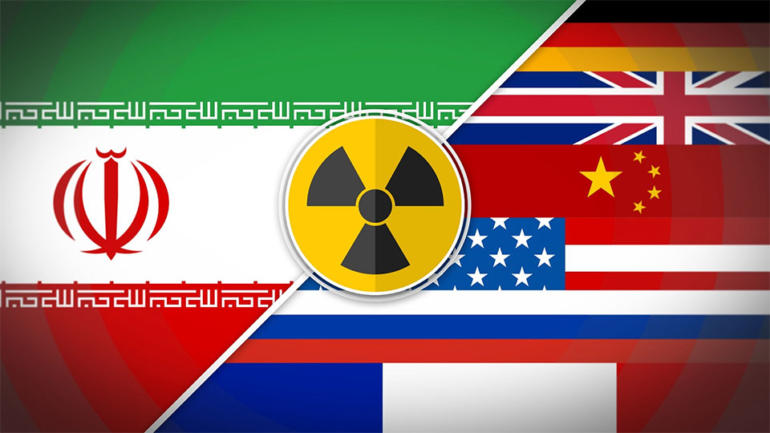
Diplomats face one lNuclear talks between Iran and world powers have stalled, raising concerns that the negotiations may fail, comprehensively killing the 2015 nuclear deal.
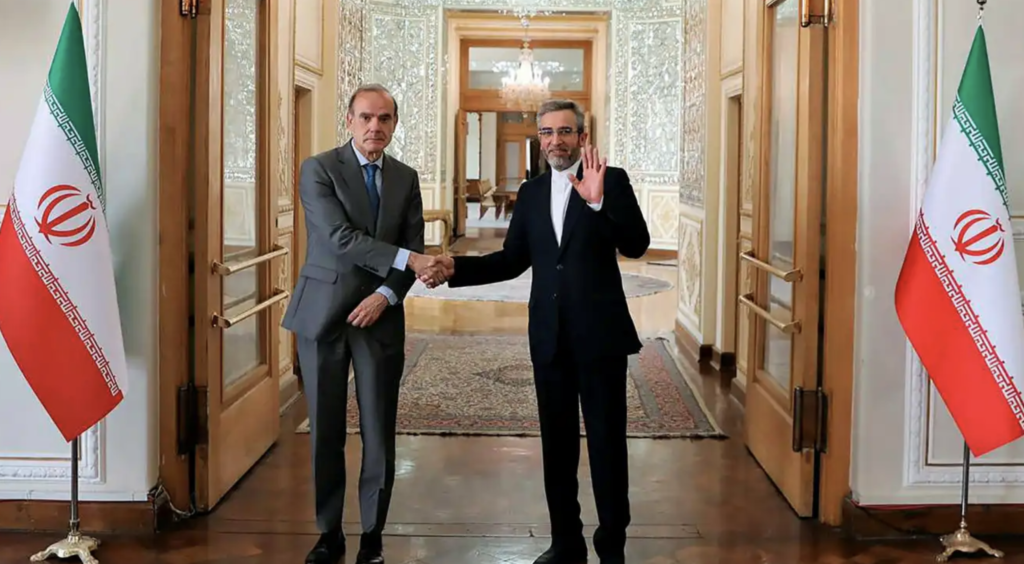
Diplomats face one lNuclear talks between Iran and world powers have stalled, raising concerns that the negotiations may fail, comprehensively killing the 2015 nuclear deal.
Dr. Mousavian’s Interview with the CNN.
https://www.cnn.com/2022/04/25/middleeast/saudi-iran-talks-resume-mime-intl/index.html
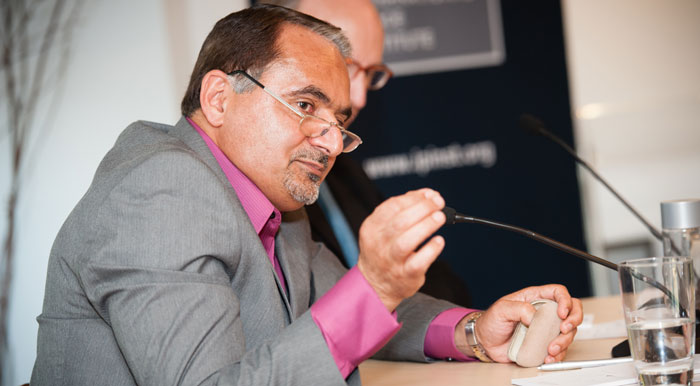
Vali Nasr and Hossein Mousavian write for Foreign Affairs:
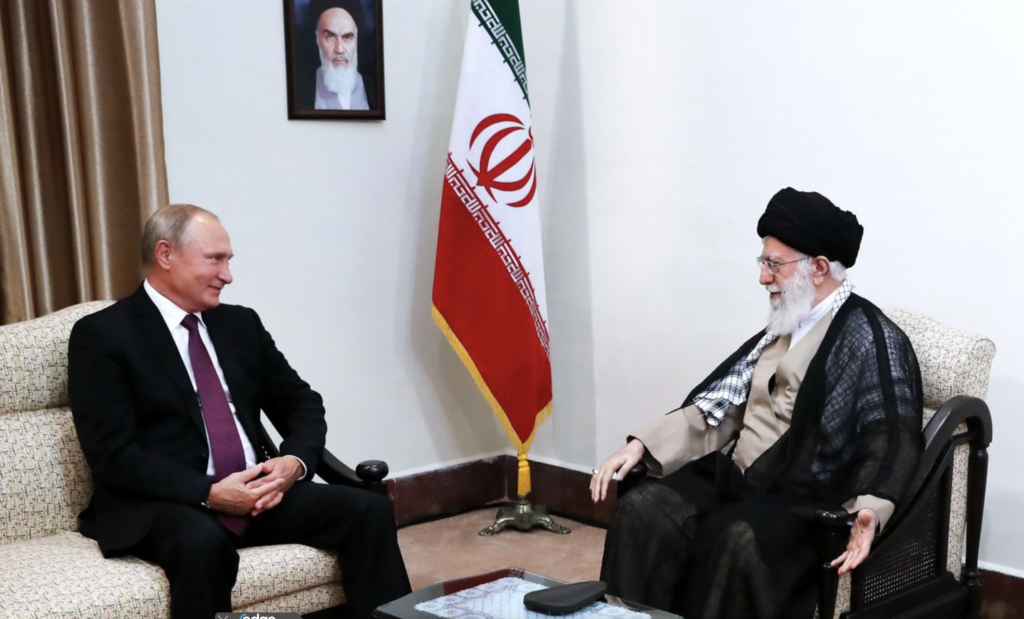
It does not help that Iran also deeply distrusts Washington’s motivations. Iranian Supreme Leader Ali Khamenei recently dismissed a U.S. demand tying its return to the JCPOA to future negotiations over regional issues, saying the United States is using the issue to drag its feet on rejoining the nuclear deal. Iran, he added, will not accept foreign meddling when it comes to its national security interests
Mousavian writes for the Responsible Statecraft:
“The U.S. failure to achieve its objectives and the Taliban’s re-emergence in Afghanistan is evident, but whether they represent a challenge or opportunity for Iran is still unclear.”
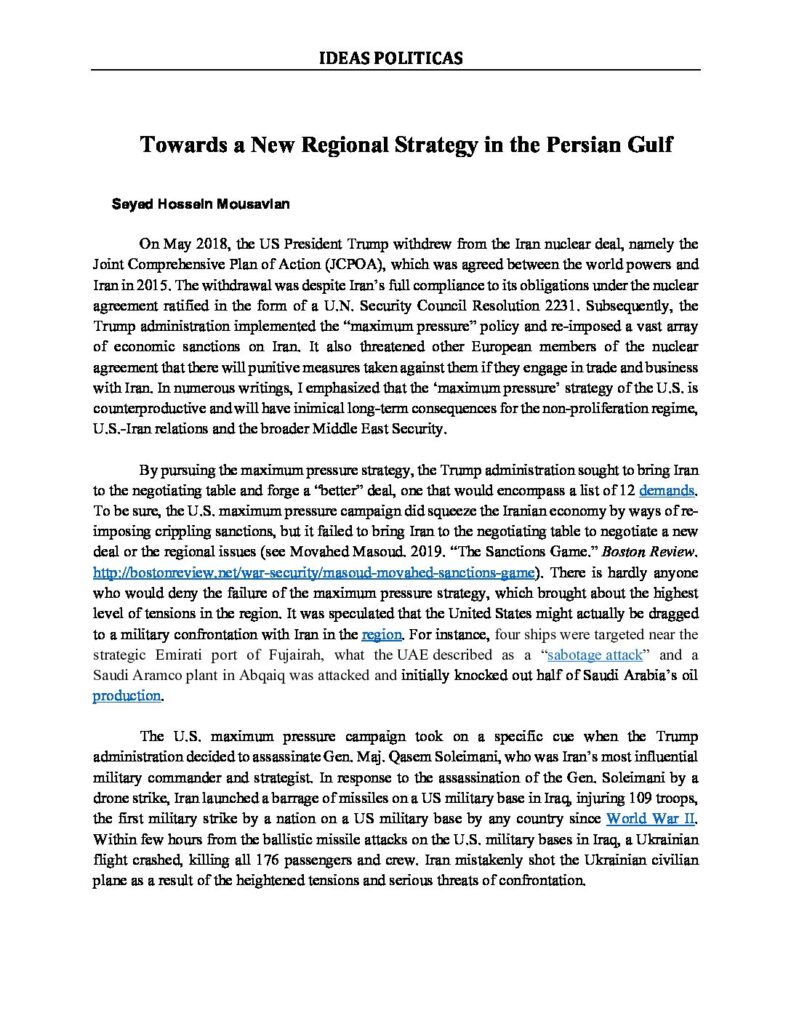
Por una nueva estrategia regional en el Golfo
Si quiere evitar los errores cometidos por Trump, Biden deberá acabar con la política de máxima presión sobre Irán y promover el acercamiento entre este y los países del Golfo.
IDEAS POLITICAS

The pressing questions now are: how will Iran’s relations with the Arab Gulf states evolve next? What will be the destiny of the nuclear deal, and how will regional policies change under the next president, who is likely to be from the principlist faction?
But there is an alternative path forward: save the Iran deal. Under the agreement, Iran accepted the most comprehensive transparency measures and limits that a member state of the Nonproliferation Treaty has ever accepted. This model should be accepted by other countries pursuing nuclear-energy programmes. For the international community, therefore, preserving the Iran deal must be a vital first step towards strengthening the nonproliferation regime.
Seyed Hossein Mousavian
While Riyadh and Tehran focus on each other, smaller Gulf countries have cause for concern about the potentially hegemonic tendencies of Saudi Arabia, Iran and Iraq. As such, a regional security system should be based on the “zero hegemony” concept. Fostering dialogue and cooperation among Gulf states is necessary for any potential rapprochement.