Events, Lectures, Media

Princeton University host Seyed Hossein Mousavian public lecture on the June 2025 US attacks on Iran and future of US-Iran relations

December 8, 2025

Princeton University’s Program on Science and Global Security (SGS) together with the Princeton School of Public and International Affairs (SPIA) hosted a public lecture Reflections on the June 2025 US Attacks on Iran: Causes, Consequences, and the Future of US-Iran Relations by Seyed Hossein Mousavian.

The lecture was introduced by Frank von Hippel, who co-founded SGS in 1974 and served as its co-director for its first 30 years, and is now a professor emeritus at Princeton University. von Hippel recruited Seyed Hossein Mousavian to join SGS in 2010. Mousavian was on the SGS research staff for 15 years as a Middle East Security and Nuclear Policy Specialist before he retired in May 2025.

In the lecture, Mousavian took as his starting point the Twelve Day War of June 2025 in which Israel and U.S. attacked Iran’s nuclear facilities, and which led to relations between Washington and Tehran entering their most dangerous and decisive period since the Iranian Revolution of 1979. The lecture explored three central questions: why did the U.S.–Iran relationship reach this crisis point, what have been the consequences so far, and what steps can be taken to prevent further war and lay a foundation for peace. As Washington and Tehran reassess their strategies amid a shifting balance of power in the Middle East, Mousavian offered his view on whether a new US-Iran nuclear deal was possible and the regional and global implications if no deal could be reached. 

Mousavian is the author of six books, including “A Middle East Free of Weapons of Mass Destruction” (2020), “Iran and the United States, An Insider’s View on the Failed Past and the Road to Peace” (2014), and “Iranian Nuclear Crisis, A Memoir” (2012). He is currently working on a book on the rise and fall of the Iran nuclear deal.

Mousavian originally trained as an industrial engineer in Iran and later earned a PhD in international relations from the University of Kent, United Kingdom and went on to have career as an Iranian government official and a scholar. As a diplomat, he served as Iran’s Ambassador to Germany (1990-1997), and as Head of the Foreign Relations Committee of Iran’s National Security Council (1997-2005), Spokesman for Iran in its nuclear negotiations with the international community (2003-2005), Foreign Policy Advisor to the Secretary of the Supreme National Security Council (2005-2007), Vice President of the Center for Strategic Research for International Affairs (2005-2009), General Director of Foreign Ministry for West Europe (1987-1990), He was Chief of Parliament Administration (1984-1986) and the editor-in-chief of the English-language international newspaper Tehran Times.

https://sgs.princeton.edu/news-announcements/news-2025-12-08
Lectures

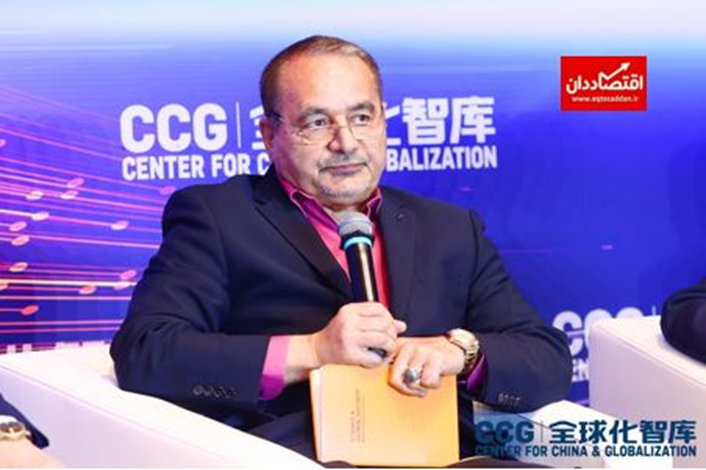
موسویان در مجمع جهانی چین: تشریح شش واقعیت مهم در مورد عاریسازی خاورمیانه از سلاحهای کشتار جمعی

دهمین مجمع سالیانه جهانی “چین و جهانی شدن” در پکن با حضور حدود ۳۰۰ میهمان ازبیش از ۱۰۰ کشور جهان در پکن برگزار شد. در این کنفرانس موضوعات مهم از جمله آینده رابطه چین با آمریکا و غرب، جهان چند قطبی یا تک قطبی، تاثیرحکمرانی جهانی بر اقتصاد و امنیت و محیط زیست جهان، جنگ غزه و جنایات اسرائیل علیه فلسطینی ها، عاریسازی خاورمیانه از سلاحهای هسته ای و کشتار جمعی و صلح و ثبات و امنیت در خاورمیانه مورد بحث و گفتگو قرار گرفت
  موسویان با تشریح شش واقعیت مهم در مورد عاریسازی خاورمیانه از سلاحهای کشتار جمعی گفت

 بزودی چند کشور “در آستانه بمب هسته ای” در خاورمیانه ظهور و به “انحصار بمب هسته ای اسرائیل” خاتمه خواهند داد

 آمریکا و قدرتهای جهانی کنوانسیونهای خلع سلاح را برای ایران تبدیل به جاده یکطرفه کرده چون ایران در مقابل اجرای تعهدات از حقوقش محروم مانده است

https://www.pailixiang.com/album_ia6223637716.html

https://www.entekhab.ir/fa/news/788088/

Lectures

Lessons Learned from Listening to Iran

Washington Post’s prominent journalist, Walter Pincus, advises the US politicians to listen the recommendations proposed by Dr. Mousavian.

Mousavian observed more broadly that, “The core conflict between Iran and the U.S. is about the region and not the nuclear [issue]. The U.S. has tried to isolate Iran, and Iran has tried to undermine that; 40 years of this has been a losing game for both.”

He pointed out that more than one-third of Iranians are living below the poverty line and so the U.S. should, among other things, “focus on economic investment and technological cooperation rather than sanctioning and weaponizing; …establish friendly relations with all countries rather than creating alliances with some countries to fight other countries. support a new regional security and cooperation system in the Persian Gulf, hand over the responsibilities to the regional countries to maintain peace and stability rather than trying to achieve it with tens of military bases and trillions of dollars…[and] promote civilian diplomacy to promote citizen-to-citizen relationships which would respect local culture rather than imposing Western culture.”

He closed by saying, “What America needs today is a new strategy that does not involve wars or regime changes and operations against sovereign states obsessively trying to control everyone in every part of the world. This is my message to this deterrence summit. Thank you.”

There was some applause, but more important, Mousavian should have left all thinking that some elements of past and present American foreign and defense policies might need a second look.

Interviews, Lectures, مقاله ها

American Wars Main Source of Instability in Middle East: Senior expert

“Following the start of the presidency of Donald Trump, we have entered the most hostile era in the history of US-Iran relations, and hostility is not a new phenomenon in relations between the two countries. For the past forty years, the US governments have sought to change the regime or so-called containment of Iran, except Barack Obama’s second term in office, which experienced ‘interactions’ politics,”

Read more

American wars main source of instability in the Middle East: Senior expert;  June 22, 2019. IRNA.

Events, Lectures, مقاله ها

Panel Discussion: Saudi Arabia and Iran as the new decisive frontline in the Middle East

Panel Discussion: Saudi Arabia and Iran as the new decisive frontline in the Middle East

The European Council on Foreign Relations (ECFR)

Speakers:

Abdel Aziz Abu Hamad Aluwaisheg, Assistant Secretary General for Political and Negoatiation Affairs, GCC

Bassma Kodmani, Execeutive Director, Arab Reform Initiative

Seyed Hossein Mousavian, Former Iranian Ambassador and Foreign Policy Advisor to the Secretary of the Supreme National Security Council

Justin Vaïsse, Director of Policy Planning, Ministry of Foreign Affairs, France

Moderator:  Julien Barnes-Dacey, Director of the Middle East and North Africa Programme, ECFR

Full Video of Panel Discussion

“Saudi Arabia and Iran as the new decisive frontline in the Middle East,” ECFR Panel Discussion, May 28, 2018.

Lectures, Media, Media Coverage, مقاله ها

Is peace possible?

“With the May 8 announcement by President Donald J. Trump that the U.S. would withdraw its support for a 2015 nuclear nonproliferation agreement with Iran, the Middle East, and the world at large, are entering a dangerous new era … That was the assessment of Seyed Hossein Mousavian, a former nuclear negotiator for Iran and current nuclear policy specialist at Princeton University, who spoke to the Windham World Affairs Council on May 11 at Centre Congregational Church.”

Read More

“Is peace possible?” Randolph Holhut, The Common Online, May 16, 2018.